Introduction: Moving Beyond Symbolic Worship
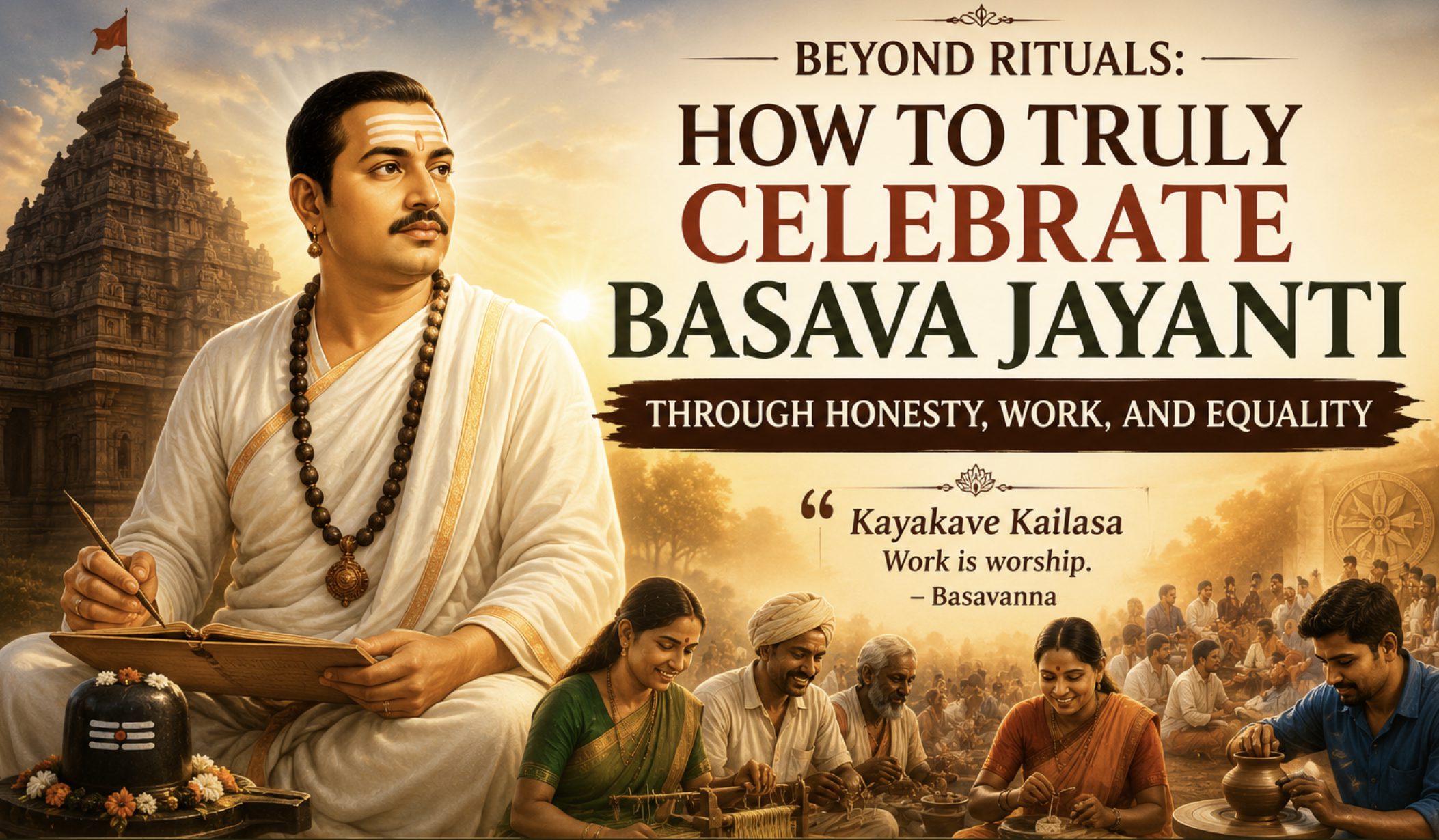
Festivals and birth anniversaries of great spiritual reformers are often celebrated with ritualistic fervor—decorating photographs with flower garlands, holding processions, and offering prayers. However, as Trinetra Swamiji of Chandravana Ashrama emphasizes on the sacred occasion of Akshaya Tritiya and Basava Jayanti, true veneration lies not in external rituals, but in embodying the core philosophy of 12th-century social reformer Jagadguru Basavanna.
Akshaya Tritiya is traditionally viewed as a day that elevates individuals from spiritual poverty to divine wealth through the blessings of great souls (Mahatmas). To honor Basavanna’s legacy on this holy day, society must align with his revolutionary ideals of anti-corruption, humility, equal fellowship, and honest labor.
A Vision for Corruption-Free Governance & Society
The most radical call to action delivered by Swamiji is the creation of a bribe-free, corruption-free society. Instead of treating Basava Jayanti as merely a government holiday or a ceremonial event, Swamiji proposes a concrete moral standard:
“If we cannot eliminate corruption overnight, let us at least observe Basava Jayanti as a completely bribe-free day across our nation—where no official accepts a bribe and no citizen offers one.”
Swamiji further urges government offices and public servants to honor Kayakave Kailasa (“Work is Worship”) by working with greater dedication—even extending their work hours by an hour—to serve the public with integrity.
Core Pillars of Basavanna’s Philosophy
Basavanna’s 12th-century Vachana literature remains one of humanity’s greatest treasures of social reform and spiritual wisdom. His life rested on three timeless pillars:
| Spiritual & Social Principle | Meaning & Practical Application |
|---|---|
| Kayaka (Dignity of Labor) | Believing that honest work is itself heavenly (Kayakave Kailasa). Earning through hard work and utilizing surplus resources for the community. |
| Dasoha (Selfless Sharing) | Offering food, shelter, and knowledge (Jnana Dasoha) to all human beings without discrimination of caste, creed, or economic status. |
| Samatva (Universal Equality) | Viewing every individual as one’s own (“Iva Nammava”), eradicating social hierarchies, and sharing communal meals as equals. |
Practical Application: “Iva Nammava” in Modern Ashrams
Reflecting on how these ancient values are practiced today, Swamiji shares the daily culture of Chandravana Ashrama. Regardless of caste, background, or social standing, every visitor who steps into the sanctuary is welcomed as a family member (“Iva Nammava”—“He is one of our own”).
By providing equal seating, sharing meals prepared through honest effort (Kayaka), and imparting spiritual awareness (Jnana Dasoha), the ashram breathes life into Basavanna’s Vachanas.
The Seven Moral Precepts for Inner and Outer Purity
Basavanna outlined a universal code of conduct (Saptasutras) essential for personal character and social harmony:
- Do not steal (Kalabeda)
- Do not kill or cause violence (Kolabeda)
- Do not utter falsehoods (Hasiya Nudiyalu Beda)
- Do not be angry with anyone (Thanna Banni Beda)
- Do not harbor disgust for others (Idara Aliyalu Beda)
- Do not praise yourself (Thannannu Bannisabeda)
- Do not covet others’ wealth or properties (Parara Dhana Nammadalla)
This code represents both inner purity (Antaranga Shuddhi) and outer purity (Bahiranga Shuddhi).
Key Takeaways for Everyday Life
- Honor Work as Worship: Execute every professional duty with sincerity and honesty.
- Reject Bribery and Greed: Practice strict personal ethics in financial and public dealings.
- Feed and Serve Selflessly: Practice Dasoha by sharing food and wisdom with those in need.
- Eradicate Social Bias: Treat every person with equal respect, humility, and warmth.