Introduction: The Myth of the Unchangeable Person
When an individual strays onto a path of anger, violence, or moral decline, society is quick to write them off. We often assume that once someone hits a certain threshold of wrongdoing, they are permanently broken or beyond redemption.
In an inspiring discourse, Trinetra Swamiji of Chandravana Ashrama dismantles this misconception. Recounting the iconic ancient meeting between Gautama Buddha and the feared bandit Angulimala, Swamiji reveals that every human being retains the capacity to change—provided they receive the right guidance, cultivate patience, and willingly undergo honest penance.
The Terror of Angulimala
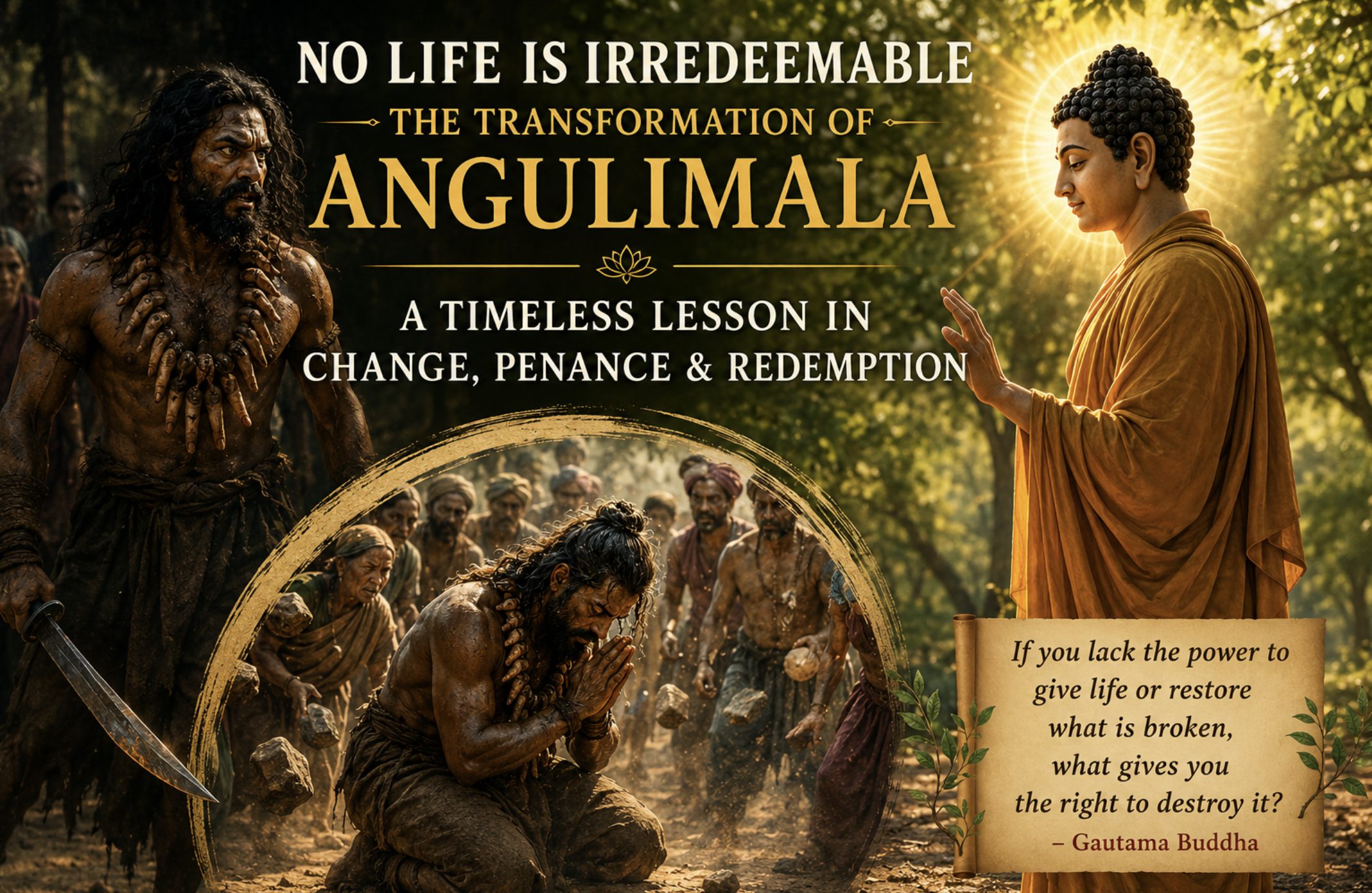
Angulimala was once a feared outlaw who terrorized nearby villages. Driven by a destructive vow, he sought to murder 108 people, severing a finger from each victim to wear as a gruesome garland around his neck (Anguli meaning finger, Mala meaning garland). Driven by rage, he took pleasure in inflicting pain while villagers lived in constant fear and despair.
When Gautama Buddha walked down the very forest path where Angulimala lay in wait, villagers begged the Enlightened One to turn back. Undeterred, Buddha walked straight toward the outlaw.
The Wisdom of Buddha: A Lesson in Creation vs. Destruction
When Angulimala confronted Buddha, weapon drawn and ready to strike, the Buddha remained calm and made a simple request:
“Before you take my life, fulfill one small wish. Cut a single branch from that thriving tree over there.”
Angulimala unsheathed his sword and severed the branch in a single blow.
Then Buddha spoke quietly:
“Now, reattach the branch to the tree.”
Angulimala scoffed, shouting that it was impossible to put a severed branch back on a living tree. Buddha looked at him and delivered the masterstroke of wisdom:
“If you lack the power to give life or restore what is broken, what gives you the right to destroy it?”
Struck to his core by this realization, Angulimala dropped his weapons, fell to the ground, and begged to become Buddha’s disciple.
The Two Pathways of Human Character
| The Trajectory of Destruction (Moha & Krodha) | The Pathway to True Transformation (Satsanga) |
|---|---|
| Driven by ego, unbridled anger, and arrogance | Driven by self-awareness, humility, and patience |
| Focuses on destroying what it cannot create | Focuses on repair, service, and healing past harm |
| Brings fear to others and inner restlessness to oneself | Brings peace to society and deep spiritual liberation |
Penance, Patience, and Final Redemption
Real transformation does not happen overnight through words alone; it requires active atonement (Prayaschitta). Buddha instructed Angulimala that before taking monkhood, he had to return to the very society he had harmed and serve them selflessly for two years.
During those two years, the villagers hurled insults, curses, and stones at him. Yet, Angulimala bore every insult with unwavering patience (Saha-na) and emotional composure. Having burned away his past karma (Prarabdha Karma) through sincere repentance, Buddha finally initiated him as a monk. The very society that once trembled in fear eventually came to love and revere him.
Core Principles for Personal Redemption
- Refuse to Label People Permanently: No matter how far someone has fallen, a pathway to reform always exists.
- Seek Wise Company (Satsanga): Overcoming deep-seated anger and hatred requires the guidance of wise, calm mentors.
- Understand the Gravity of Destruction: Respect life and harmony; never destroy what you cannot rebuild or nurture.
- Embrace Genuine Penance: True change requires taking responsibility for past mistakes and demonstrating patience through service.